
Ranthambore Tiger Safari + Golden Triangle: How to Add Wildlife to Your India Trip (2026)
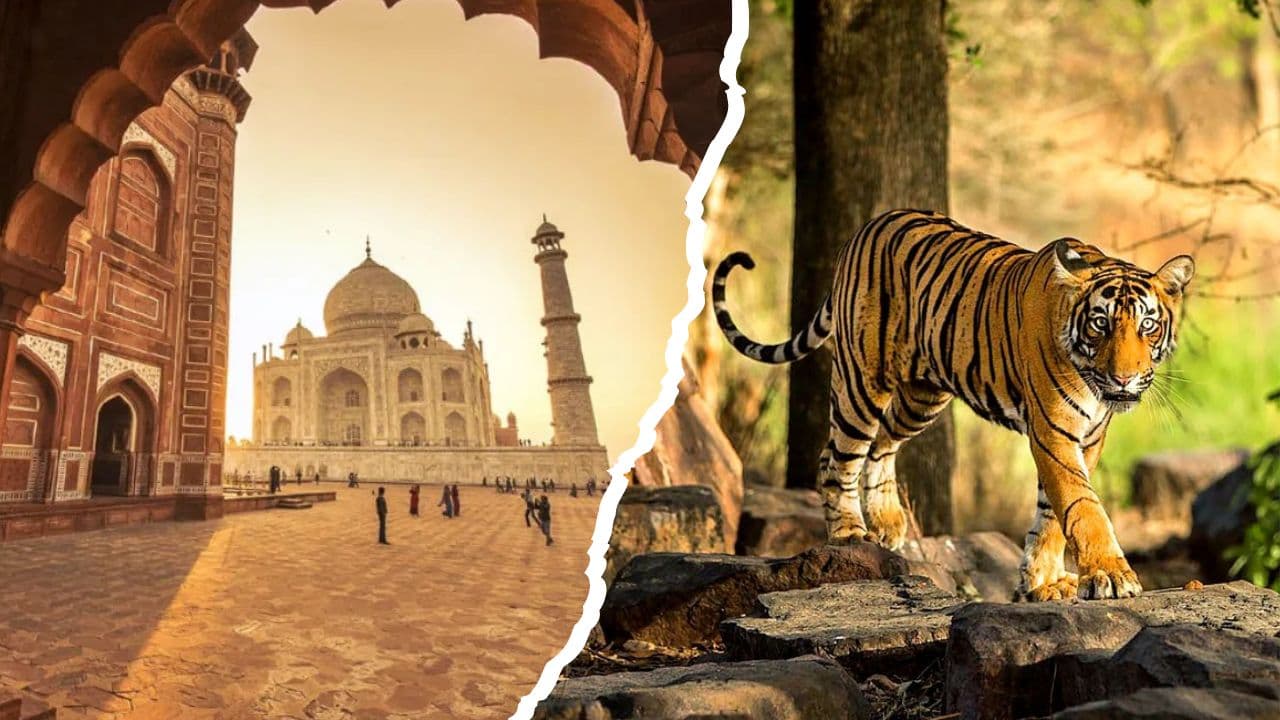
Delhi, Agra and Jaipur give you India's greatest monuments. Add Ranthambore National Park and the trip gains something different: a morning in an open vehicle, engine off, waiting quietly in a forest where a tiger may walk out of the trees. The good news is that Ranthambore sits almost exactly between Agra and Jaipur, so it turns the Golden Triangle into a heritage-and-wildlife journey with very little backtracking.
Why Ranthambore Fits the Golden Triangle
Ranthambore is in Rajasthan, near the town of Sawai Madhopur. It is one of India's best-known tiger reserves, and what makes it unusual is the setting. Crumbling walls of a hill fort, ancient stepwells and lakes sit inside the forest, so a safari here is part wildlife, part ruins. The fort is part of the UNESCO-listed Hill Forts of Rajasthan.
Because it lies on the way from Agra towards Jaipur, you spend your driving time going somewhere new rather than doubling back. The alternative, a separate wildlife trip, would cost you several extra days.
Ranthambore at a Glance
| Location | Near Sawai Madhopur, Rajasthan |
| From Agra | About 3-4 hours by road (on our itinerary) |
| To Jaipur | About 3 hours by road |
| Safari types | Canter (large open bus) or jeep (gypsy) |
| Daily drives | A morning and an afternoon drive, each roughly 3-4 hours |
| Season | Roughly October to June. Closed for the monsoon (July to September) |
A Sample 6-Day Route
This is the route of our Golden Triangle Tour with Wildlife:
- Day 1, Delhi: Arrival, hotel check-in and rest.
- Day 2, Delhi to Agra: Red Fort, Qutub Minar, Humayun's Tomb, India Gate and more, then the evening drive to Agra.
- Day 3, Agra to Ranthambore: Taj Mahal at sunrise, Agra Fort, then the drive to Ranthambore and an evening safari.
- Day 4, Ranthambore: A full day with a morning and an evening safari.
- Day 5, Ranthambore to Jaipur: A final early safari, then Amber Fort and Jal Mahal in Jaipur.
- Day 6, Jaipur to Delhi: Hawa Mahal, Jantar Mantar, City Palace, then the drive back to Delhi.
That plan gives you up to four safari drives, and more drives means a better chance of a sighting.
Canter or Jeep?
| Jeep (Gypsy) | Canter | |
|---|---|---|
| Group size | Small group | Larger shared vehicle |
| Cost per person | Higher | Lower |
| Photography | Easier, more room to shoot | Shared space, less flexible |
| Best for | Couples, families, photographers | Budget-conscious travellers |
Both go into the same park and both give you a genuine chance of a sighting. The difference is comfort and control, not access. Safari seats are allocated by the forest department, including which zone you enter, so no operator can promise a particular route.
Best Time to Go
- October-November: The park reopens after the monsoon. The forest is green and the weather is warm but pleasant.
- December-February: Comfortable days, but early-morning drives are cold in an open vehicle. Bring proper layers.
- March-May: Hot, but many visitors rate it highly for sightings because animals gather near water. Take the morning drive and drink plenty of water.
- June: Very hot. Fewer visitors, and the season is drawing to a close.
- July-September: The park is closed for the monsoon.
For a combined trip, October to March also happens to be the best season for the Taj Mahal and Jaipur. See our best time to visit the Taj Mahal guide for the month-by-month picture.
Set Realistic Expectations
A tiger sighting is never guaranteed. Some drives find a tiger within minutes, and some do not find one at all. Even then the drive is rarely empty: spotted deer, sambar, nilgai, wild boar, marsh crocodiles in the lakes, and a wide range of birds are common, and leopards and sloth bears also live in the park.
Treat every drive as a slow, quiet look at a forest, and a tiger as a bonus. Visitors who do that tend to enjoy the experience most. Booking multiple drives is the single best thing you can do.
Beyond the Tigers: Ranthambore Fort
The fort stands on a hill inside the park, and its walls, gates and reservoirs are part of what makes Ranthambore special. Entry to the fort is separate from the safari, so ask about it when you plan your time. There is also a Ganesh temple inside the fort that is popular with local visitors.
What to Pack for a Safari
- Clothing: Neutral colours (khaki, olive, brown, beige). Avoid bright colours and white.
- Layers: A jacket, scarf and cap for cold winter mornings. The open vehicle is windy.
- Sun protection: Sunglasses, sunscreen and a hat for afternoon drives.
- Footwear: Closed, comfortable shoes.
- Camera: A zoom lens if you have one. Turn off the flash and silence your phone.
- Binoculars: Helpful for birds and distant animals.
- ID: Your passport or a valid photo ID. It is checked at the gate.
Safari Etiquette
- Stay seated and keep your voice low. Never stand up or lean out of the vehicle.
- Do not feed, call out to, or try to attract the animals.
- Do not use flash or drones.
- Follow your driver and the park guide's instructions at all times.
- Take all rubbish with you.
See the Taj Mahal and a Tiger in One Trip
Our 6-day Golden Triangle with Wildlife tour covers Delhi, Agra, Ranthambore and Jaipur with a private air-conditioned car and a live guide who speaks Hindi, English, Spanish, Russian or French. Tiger safaris (canter or jeep), monument tickets and hotels can be added on request.
View the Wildlife Tour →Planning a classic route first? Read our 7-day Golden Triangle itinerary.